

For decades, traditional stitching and seam-taping have been the default manufacturing methods for outdoor luggage. However, as road cycling and bikepacking evolve toward extreme weather resilience and aerodynamic efficiency, traditional needle-and-thread methods are reaching their mechanical limits. For premium cycling gear, High-Frequency (HF) Welding is no longer a luxury—it is a technical necessity to achieve true, long-lasting hermetic seals.
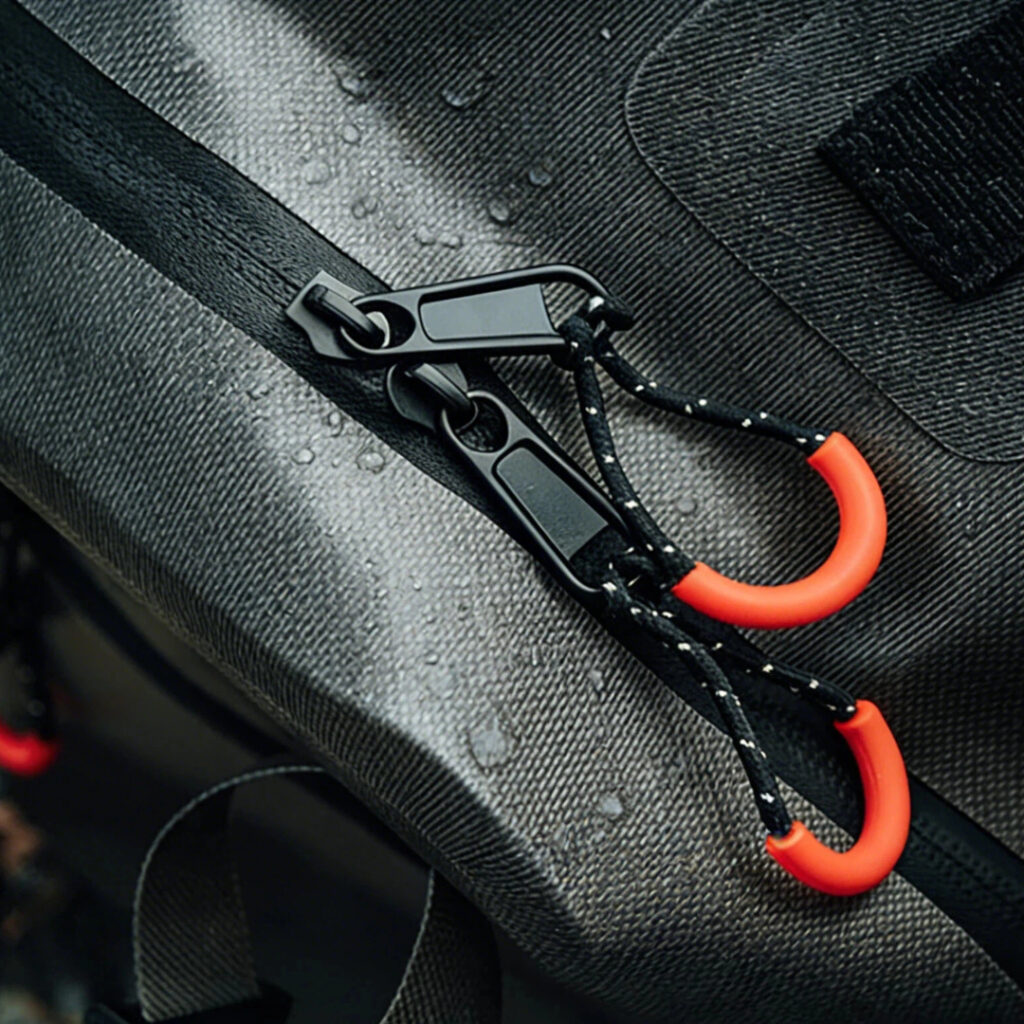
The Structural Vulnerability of Stitched Seams
- The Needle Puncture Problem: Every time a sewing needle passes through a fabric, it creates a physical hole. Even with advanced seam-taping, prolonged vibrations from gravel roads and heavy loads cause the tape to flex, degrade, and eventually delaminate, leading to micro-leaks.
- Stress Concentration: Stitched seams concentrate all mechanical tension on individual threads. Under heavy packing, these thread lines become failure points.
- Molecular Fusion (HF Welding): High-frequency welding uses electromagnetic energy to agitate the molecules within the TPU coating, causing them to heat rapidly and fuse into a single, continuous layer. There are no holes, no threads, and no glues—the seam becomes as strong as the fabric itself.
Our seamless engineering works optimally when paired with advanced composites. To understand the science behind our textile choices, discover [Why 210D-600D TPU Nylon is Perfect for Road Cycling Bags].
As an ISO9001-certified OEM/ODM partner, we have replaced traditional sewing lines with state-of-the-art HF welding stations to ensure all private-label gear achieves certified IPX6 and IPX7 waterproof ratings.